
Camping in Rainy Weather: Hacks That Save the Experience
Camping is often imagined as a serene adventure under sunny skies, with warm evenings by the fire and clear mornings filled with birdsong. But outdoor life is unpredictable, and rain is one of the most common challenges faced by campers. While it can dampen spirits, it does not have to ruin the experience. With preparation and the right techniques, camping in wet conditions can even become memorable and enjoyable. Rain brings unique beauty to the wilderness—the mist over trees, the calming rhythm of drops on a tent, and the freshness of the air. The key is knowing how to stay dry, keep gear protected, and maintain comfort when everything around you is damp.
The Importance of Proper Shelter
The first line of defense against rain is your shelter. Choosing the right tent and campsite can make all the difference. Tents designed for three or four seasons typically have rainflies that extend low to the ground, preventing water from seeping in. A waterproof footprint beneath the tent adds an additional layer of protection, keeping ground moisture at bay.
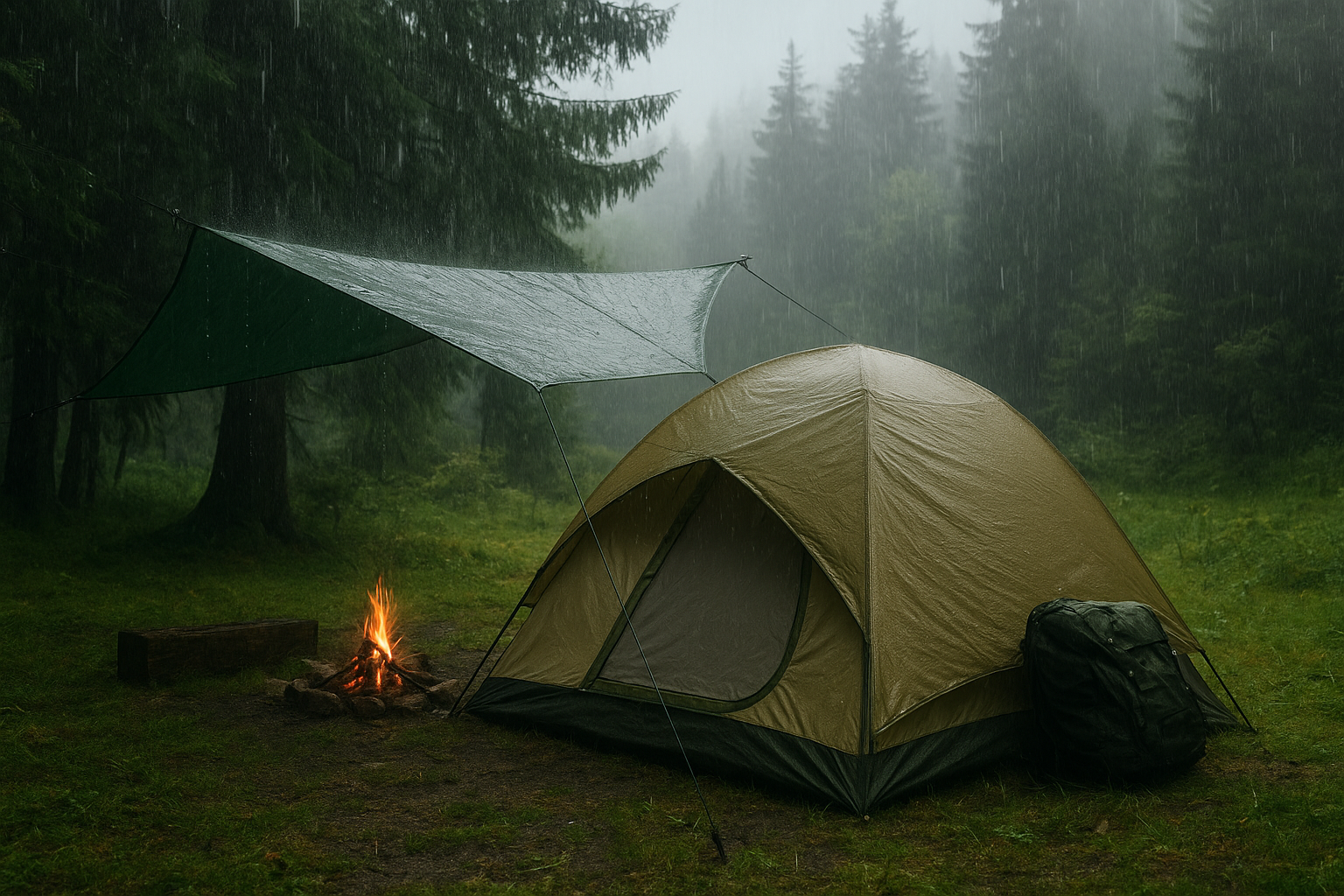
Equally important is the location. Setting up on high ground prevents pooling water from flooding your tent. Avoiding depressions, riverbanks, or spots beneath large trees helps minimize risks of water accumulation and falling branches. For extra security, tarps can be pitched above or below the tent. An overhead tarp creates a dry zone for cooking or gathering, while a ground tarp provides insulation and prevents muddy seepage.
Keeping Gear Dry and Protected
Wet gear is one of the fastest ways to ruin a camping trip. Investing in dry bags or waterproof stuff sacks ensures essentials like clothing, sleeping bags, and electronics remain safe. Lining backpacks with garbage bags or pack liners provides another layer of defense against leaks.
Once at camp, it is wise to separate wet and dry gear. Hanging damp items under a tarp or in designated “wet corners” of camp prevents moisture from spreading. Quick-dry fabrics are invaluable, as they shed water faster and reduce the discomfort of lingering dampness.
Shoes are another critical concern. Waterproof boots keep feet dry, but if soaked, stuffing them with newspaper or dry cloth speeds up drying overnight. Always pack an extra pair of socks in a sealed bag—nothing restores morale like dry feet after hours in the rain.
Fire in the Rain: The Ultimate Challenge
One of the greatest difficulties in wet weather camping is building and maintaining a fire. Yet, with patience and preparation, it is possible to enjoy warmth even when everything is soaked.
The key lies in sourcing dry tinder and kindling. Beneath thick logs, inside dead branches, or under dense foliage, small pieces of dry wood often remain sheltered. Carrying fire starters—wax cubes, cotton balls soaked in petroleum jelly, or commercial waterproof matches—ensures a reliable spark.
Creating a base of dry sticks or bark prevents the fire from being smothered by wet ground. Once lit, covering the fire area with a tarp or constructing a lean-to with branches shields the flames from rain while allowing smoke to escape. Feeding the fire with gradually larger sticks helps build strength, eventually sustaining logs even in damp air.
Cooking and Eating in Wet Conditions
Cooking during rainy weather requires adaptation. Lightweight stoves are often more reliable than open fires, especially in heavy rain. Setting up a cooking tarp not only keeps food preparation dry but also creates a social gathering point during storms.
Meals should be simple and hearty, focusing on warmth and energy. Hot drinks like tea, cocoa, or coffee become essentials, boosting morale and body temperature. Pre-prepped meals and non-perishable snacks minimize exposure to the elements, allowing for quick, nourishing food without prolonged cooking.
Staying Comfortable and Positive
Physical comfort is as much about mindset as it is about gear. Layered clothing helps regulate body temperature—base layers wick moisture, insulating layers retain warmth, and outer shells block wind and rain. Avoiding cotton is critical, as it holds moisture and increases the risk of hypothermia.
Mental resilience is equally vital. Rain can test patience, but embracing it as part of the adventure shifts perspective. Listening to rain on the tent, sharing stories under a tarp, or watching mist roll through a valley can become cherished memories when framed positively.
Safety Considerations in Rainy Camping
Beyond comfort, safety must remain a priority. Wet conditions increase the risk of slips, falls, and hypothermia. Ensuring proper footwear, maintaining dry clothing, and monitoring for signs of cold stress are essential. Flash floods are another risk in certain regions; awareness of terrain and weather forecasts helps prevent dangerous situations.
Lightning is a further consideration. In thunderstorms, avoiding exposed ridges, tall isolated trees, or metal objects reduces risk. Tents should be pitched in sheltered yet elevated spots, offering both safety and drainage.
Conclusion: Turning Rain Into Adventure
Camping in rainy weather challenges even seasoned outdoor enthusiasts, but with preparation and creativity, it transforms into an opportunity rather than a setback. Effective shelter, dry gear, clever fire strategies, and a resilient mindset turn soggy conditions into a rewarding experience.
Ultimately, rain is part of the natural rhythm of the outdoors. Those who learn to adapt not only safeguard their comfort but also deepen their connection to nature’s many moods. With the right hacks, a rainy camping trip becomes less about surviving the storm and more about enjoying the unique atmosphere it brings.