
Rio Carnival: The Heartbeat of Brazil’s Joy and Cultural Legacy
The Rio de Janeiro Carnival is not just a party — it’s an explosion of color, rhythm, and soul that captures the essence of Brazil. For one week every year, this South American city transforms into the world’s biggest stage, where samba dancers, drummers, and floats move as one in a dazzling display of creativity and passion. Behind the feathers, sequins, and street parades lies a story deeply rooted in Brazil’s cultural evolution, diversity, and identity.
The Origins of a Celebration
The origins of the Rio Carnival date back to the 18th century, influenced by Portuguese colonists who brought with them the concept of “Entrudo,” a pre-Lenten festival marked by feasting and playful chaos. Over time, African, Indigenous, and European cultural elements merged, creating something uniquely Brazilian. Samba, born in the Afro-Brazilian communities of Bahia and Rio, became the heartbeat of the celebration — a dance and rhythm that expressed freedom, resistance, and joy.
By the early 20th century, samba schools began to form, each representing local neighborhoods, or favelas. These schools became the lifeblood of the Carnival, showcasing elaborate parades and stories that reflected Brazil’s struggles and triumphs. Today, more than 70 samba schools compete during the festival, each performing a thematic show that can take a year to prepare.
The Magic of the Sambadrome
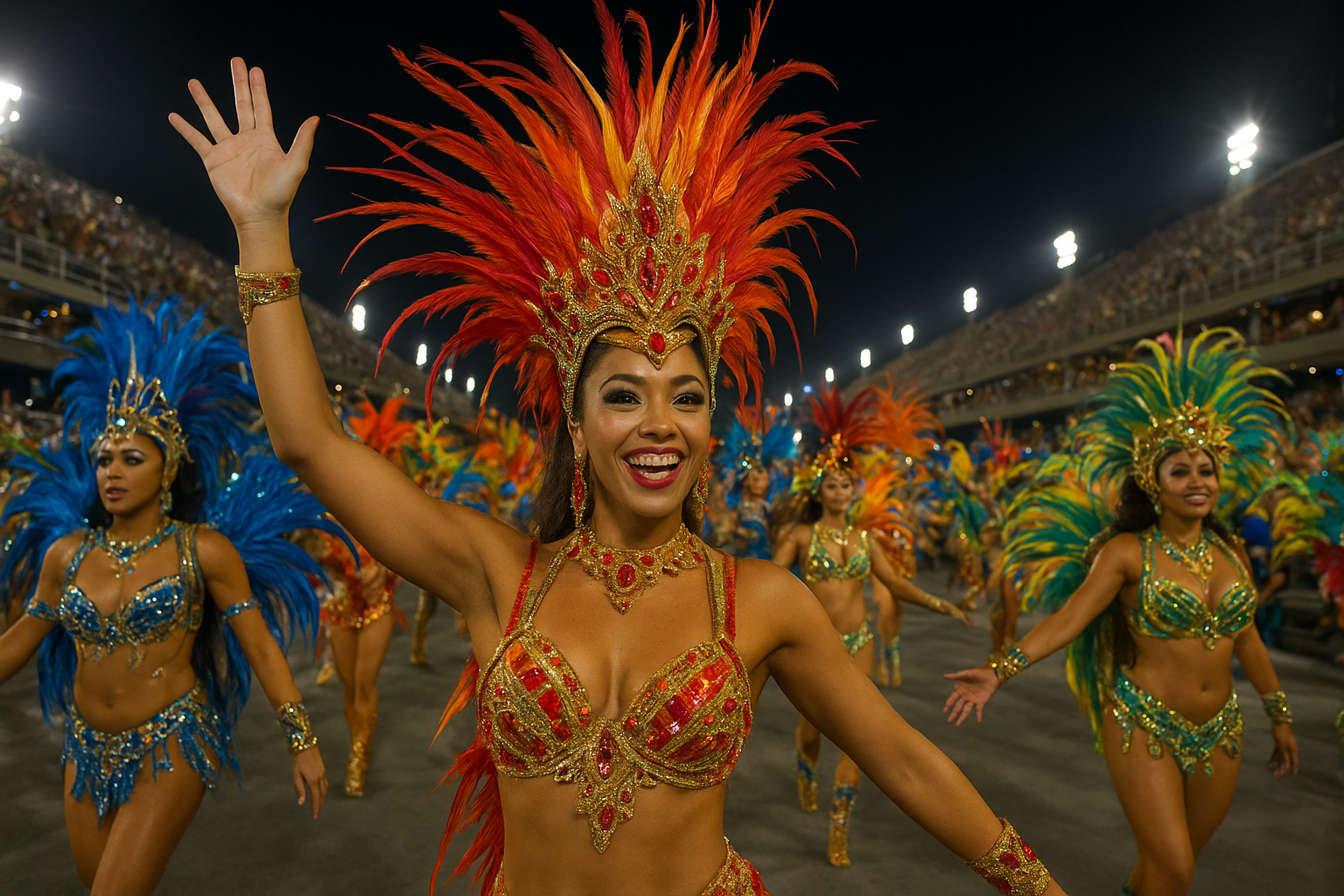
At the center of the modern Carnival experience is the Sambadrome Marquês de Sapucaí, a long open-air parade ground designed by the renowned architect Oscar Niemeyer. Here, samba schools perform choreographed parades that combine music, costume design, and storytelling into one breathtaking spectacle. Each school has around 3,000 to 5,000 participants, divided into different wings, each symbolizing a part of the parade’s theme.
The performances are judged on categories such as rhythm, harmony, costumes, floats, and overall creativity. It’s more than entertainment — it’s a form of cultural expression and community pride. Winning the Carnival is one of the greatest honors for any samba school.
Beyond the Parade: The Streets of Celebration
While the Sambadrome holds the main event, the true soul of Carnival lives in the streets. Thousands of “blocos” — street parties organized by communities or friends — fill Rio’s neighborhoods. These informal gatherings invite everyone to join, regardless of background or skill level. Dressed in costumes or simply covered in glitter, people dance freely to the beat of drums and brass bands.
Copacabana, Ipanema, and Lapa become open-air dance floors, with each bloco offering its unique musical style and energy. Some are small and intimate; others attract millions. The sense of unity is palpable — during Carnival, the barriers of social class and status blur, replaced by pure collective joy.
The Costumes and Symbolism
The vibrant costumes are one of the Carnival’s most iconic aspects. Designed months in advance, they are meticulously handcrafted using feathers, rhinestones, sequins, and silk. But beyond their beauty lies deep symbolism. Every costume tells a story — whether representing mythical figures, historical events, or themes of social justice.
For many Brazilians, participating in Carnival is a form of artistic expression and identity. Dancers train for months, learning samba steps that demand both stamina and grace. The rhythm of the bateria (drum section) drives their movements, creating an almost spiritual connection between sound and motion.
The Cultural and Economic Impact
Carnival is not only a cultural treasure but also a massive economic event. It attracts over two million visitors annually, contributing billions to Brazil’s economy through tourism, hospitality, and entertainment. Entire industries — from costume makers to musicians — depend on the season.
However, the celebration’s meaning runs deeper than money. For communities living in favelas, the samba schools provide hope, purpose, and opportunity. They function as social projects, offering children and adults alike a way to express themselves, learn new skills, and preserve their cultural roots.
A Celebration of Resilience and Unity
What makes Rio Carnival truly extraordinary is how it reflects the Brazilian spirit — resilient, creative, and full of life. Even in times of political unrest or economic difficulty, the Carnival goes on, reminding the world that joy can be an act of resistance. It’s a moment when music, art, and humanity blend into one heartbeat — a rhythm that unites millions.
The Carnival is also evolving with the times. Sustainability initiatives are emerging, with samba schools reusing materials and promoting eco-friendly practices. Social inclusivity is also a growing focus — LGBTQ+ groups, people with disabilities, and older participants are all celebrated as essential parts of the event.
Experiencing Carnival as a Traveler
For visitors, attending the Rio Carnival is a once-in-a-lifetime experience. The key is to immerse yourself — not just as a spectator but as a participant. Join a bloco, dance with locals, and feel the rhythm of samba under the tropical sky. Explore the backstage of a samba school, learn how floats are built, or take a samba lesson.
Above all, approach Carnival with respect and openness. It’s not only about taking pictures or watching the parades — it’s about feeling the pulse of a culture that celebrates life in its purest form.
Conclusion
The Rio de Janeiro Carnival is more than an event — it’s a living expression of joy, creativity, and unity. It connects the past and the present, the rich and the poor, the artist and the dreamer. Whether you come for the music, the costumes, or the pure magic of the atmosphere, one thing is certain: once you’ve felt the beat of Rio’s Carnival, it stays with you forever.
It’s not just a celebration — it’s the heartbeat of Brazil.