
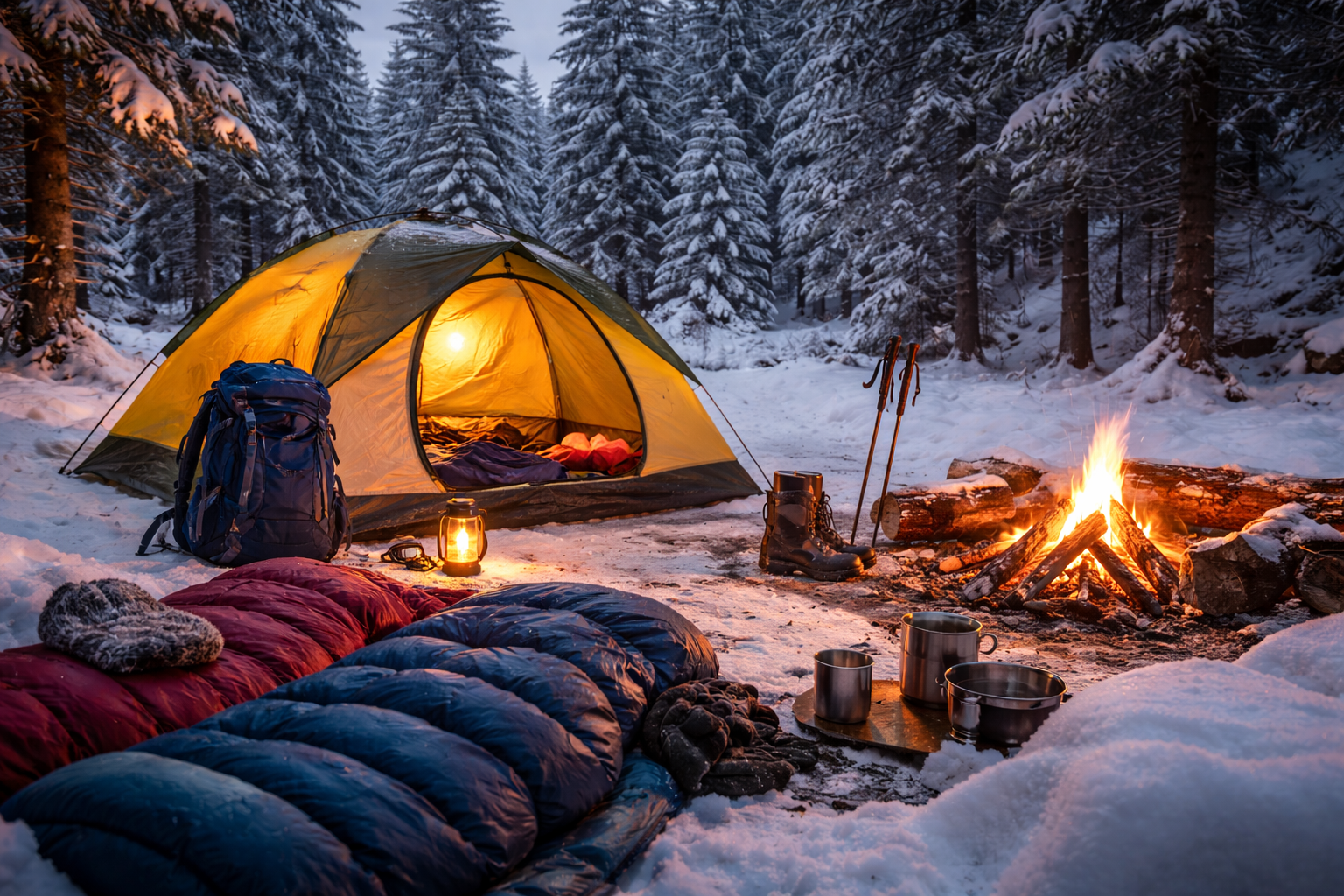
Cold Nights, Warm Adventures: The Ultimate Guide to Camping Comfortably in Fall and Winter
Camping outside the warm summer season can be one of the most rewarding outdoor experiences. Autumn forests, quiet winter landscapes, crisp air, and fewer crowds create a sense of solitude that warm-weather camping rarely offers. However, camping in fall and winter requires a different level of preparation. Cold temperatures amplify small mistakes, and comfort becomes closely tied to safety. With the right approach to sleeping systems, layered clothing, and tent insulation, cold-season camping can be not only manageable, but deeply enjoyable.
Understanding Cold-Weather Camping Challenges
As temperatures drop, the body loses heat faster, especially at night when movement stops. Wind, humidity, and ground contact all contribute to heat loss. Unlike summer camping, where discomfort is often limited to annoyance, cold-weather discomfort can quickly escalate into exhaustion or health risks. Preparation is not about luxury; it is about maintaining core warmth and energy over extended periods.
Cold-season camping success starts with the mindset that every item has a thermal purpose. Clothing, shelter, and sleep systems work together as a single ecosystem. If one element fails, the entire system becomes less effective.
Sleeping Bags: The Core of Nighttime Survival
A high-quality sleeping bag is the most critical piece of cold-weather camping equipment. Temperature ratings matter, but they should be interpreted conservatively. A bag rated for freezing temperatures is best used above that rating for true comfort. For fall and winter camping, choosing a bag rated at least 10 degrees lower than expected nighttime temperatures provides a margin of safety.
Insulation type also plays a role. Down sleeping bags offer excellent warmth-to-weight ratios and packability, making them ideal for dry, cold conditions. Synthetic insulation performs better in damp environments and retains warmth even when wet. Equally important is the sleeping bag’s fit. Excess space inside the bag requires more body heat to warm, reducing efficiency.
Sleeping Pads and Ground Insulation
Many campers underestimate heat loss to the ground. Cold earth pulls warmth from the body through conduction, making even the best sleeping bag ineffective without proper insulation beneath it. A sleeping pad with a high insulation rating is essential for fall and winter camping.
Layering pads is a common cold-weather strategy. A closed-cell foam pad placed beneath an inflatable pad increases insulation and adds redundancy in case of punctures. This layered approach dramatically improves nighttime warmth and comfort.
Layered Clothing: Managing Heat, Not Trapping Sweat
Layering is the foundation of cold-weather clothing. The goal is not to wear the thickest items possible, but to manage moisture and heat efficiently. Base layers sit directly against the skin and should wick moisture away. Materials like merino wool or technical synthetics help keep the body dry, which is crucial for warmth.
Mid-layers provide insulation by trapping warm air. Fleece, wool, or lightweight insulated jackets work well in this role. Outer layers protect against wind, rain, and snow. A windproof and water-resistant shell prevents heat loss caused by exposure while allowing moisture to escape.
The key to layering is adjustability. Overheating during activity leads to sweat, which becomes dangerous once movement stops. Removing or adding layers throughout the day keeps the body in a stable thermal range.
Keeping Extremities Warm
Hands, feet, and head lose heat quickly. Insulated gloves, spare socks, and warm hats are not optional accessories in cold-weather camping. Changing into dry socks before sleeping is one of the simplest ways to improve nighttime comfort.
Sleeping with a hat on helps retain body heat, and keeping gloves accessible prevents heat loss during nighttime tasks. Cold fingers make even basic actions more difficult, increasing fatigue.
Tent Insulation and Shelter Setup
A tent does not generate warmth, but it protects campers from wind and precipitation. Proper site selection enhances its effectiveness. Setting up shelter away from wind corridors and low-lying cold pockets improves warmth without any additional gear.
Some campers add ground tarps or footprint layers to reduce moisture and heat loss from below. Ventilation remains important even in cold weather, as condensation can dampen insulation and clothing. Controlled airflow balances warmth with dryness.
Small Habits That Make a Big Difference
Cold-weather camping comfort often comes down to routine. Eating warm, calorie-dense meals before bedtime fuels the body’s internal heat production. Staying hydrated helps circulation, which supports warmth. Preparing sleeping gear early allows the body to transition into rest without rushing in the cold.
Packing clothes for the next day inside the sleeping bag prevents them from freezing overnight. Simple habits like these reduce morning discomfort and conserve energy.
Embracing the Cold With Confidence
Fall and winter camping reward preparation with silence, beauty, and a sense of accomplishment that few other outdoor experiences offer. Cold air sharpens awareness, and warmth feels earned rather than expected. With the right sleeping system, thoughtful layering, and smart shelter insulation, cold-weather camping transforms from a challenge into a deeply satisfying adventure.
When the nights are long and temperatures drop, comfort is not about escaping the cold, but about working with it. Prepared campers don’t fear the chill — they learn to thrive in it.