
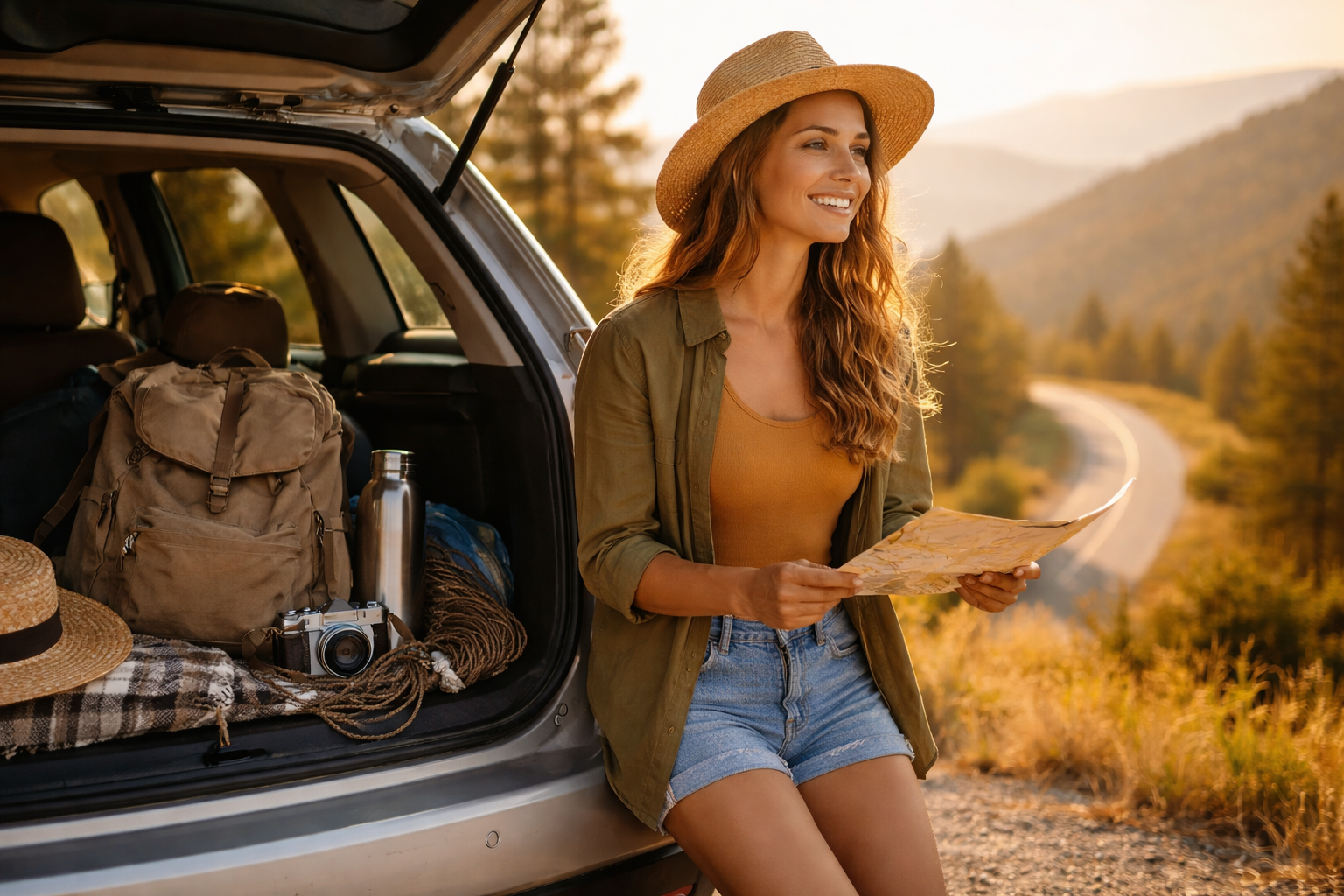
Road-Tripping Solo as a Woman — Tips, Safety & Stories from the Open Road
There is something uniquely transformative about driving alone across long stretches of highway, watching landscapes shift from city skylines to rolling hills, deserts, forests, or coastlines. For many women, solo road-tripping represents more than travel — it is independence in motion. It is the quiet confidence of navigating unfamiliar roads, choosing spontaneous detours, and discovering strength in solitude.
Yet while the experience can be empowering and unforgettable, thoughtful preparation is essential. Safety, awareness, and smart planning allow freedom to remain joyful rather than stressful. With the right approach, solo road trips become not just safe — but deeply rewarding.
Why Women Are Choosing Solo Road Trips
More women than ever are traveling alone. Some seek healing after life transitions. Others crave adventure, creative inspiration, or simply time away from constant demands. Road trips offer flexibility that flights and group tours do not. You control the route, the pace, the music, the stops.
There is power in making decisions independently — choosing where to eat, when to rest, and which scenic overlook deserves an extra hour. The road becomes both literal and symbolic: a reminder that you are capable of navigating uncertainty.
Smart Planning Without Overplanning
Preparation builds confidence. Research your route in advance, but leave space for spontaneity. Identify safe rest stops, fuel stations, and accommodation options before you depart. Download offline maps in case of limited cell service.
Share your itinerary with a trusted friend or family member. Regular check-ins provide peace of mind for both you and those who care about you.
At the same time, avoid broadcasting your exact real-time location publicly on social media. Posting after you leave a location maintains privacy while still allowing you to share your adventure.
Vehicle Readiness Is Non-Negotiable
Before any long drive, ensure your car is in excellent condition. Check tire pressure, oil levels, brakes, and windshield wipers. Keep a roadside emergency kit that includes:
- Jumper cables
- Flashlight
- First-aid kit
- Portable phone charger
- Reflective warning triangle
Knowing how to change a tire or call for roadside assistance adds an extra layer of security. Mechanical preparation reduces vulnerability and increases independence.
Personal Safety Strategies
Trust your instincts. If a location feels uncomfortable, leave. Choose well-lit areas when stopping at night. When possible, park near building entrances or under visible lighting.
At gas stations, remain aware of your surroundings. Keep doors locked while driving and avoid leaving valuables visible inside the vehicle.
When booking accommodation, select reputable hotels or well-reviewed stays. If using short-term rental platforms, verify host credibility and read reviews carefully.
Simple habits — carrying keys between your fingers when walking to your car at night, scanning your environment before exiting your vehicle — can become second nature without fueling anxiety.
Packing With Purpose
Overpacking can create clutter and stress. Instead, prioritize versatile clothing layers, comfortable shoes, and weather-appropriate gear. A small cooler with healthy snacks and water keeps you energized and reduces unnecessary stops.
Bring entertainment that does not require constant connectivity. Download podcasts, audiobooks, or playlists in advance. Silence can also be powerful — long stretches of quiet highway often become spaces for reflection and clarity.
Stories from the Road
Many women describe solo road trips as moments when self-doubt softened. One traveler recalls getting lost in a mountain region and finding not fear, but a surprising calm. Navigating her way back to the main highway strengthened her confidence in everyday life.
Another woman shares how stopping at a small-town café led to conversations with locals that shifted her perspective on community and belonging. What began as a simple coffee break became a reminder that kindness exists far beyond familiar circles.
There are also moments of challenge — sudden storms, flat tires, wrong turns. Yet overcoming them becomes part of the narrative. Each obstacle navigated alone reinforces capability.
The Emotional Landscape of Solo Travel
Driving alone creates mental space. Without constant conversation or digital distraction, thoughts rise to the surface. Some travelers journal at rest stops. Others record voice memos capturing insights that might otherwise disappear.
The rhythm of the road can be meditative. Watching the sun rise over open terrain or set behind distant hills often feels profoundly grounding. In these moments, solitude transforms into connection — not isolation, but presence.
Balancing Freedom and Caution
Solo road-tripping as a woman does not require fear-based thinking. It requires informed awareness. Preparation allows you to relax and enjoy the journey.
Freedom and safety are not opposites. They work together. The more prepared you are, the more confidently you move through unfamiliar spaces.
Returning Home Changed
Many women describe returning from solo road trips with a subtle but undeniable shift. Decisions feel easier. Boundaries feel stronger. There is pride in having navigated miles alone.
The road teaches adaptability, patience, and resilience. It reminds you that you are capable of handling the unexpected.
Solo travel does not mean isolation from the world. It means choosing your own direction. For women willing to prepare thoughtfully and trust themselves, the open highway offers more than scenery — it offers self-discovery.
And sometimes, the most important destination is the version of yourself you meet along the way.