
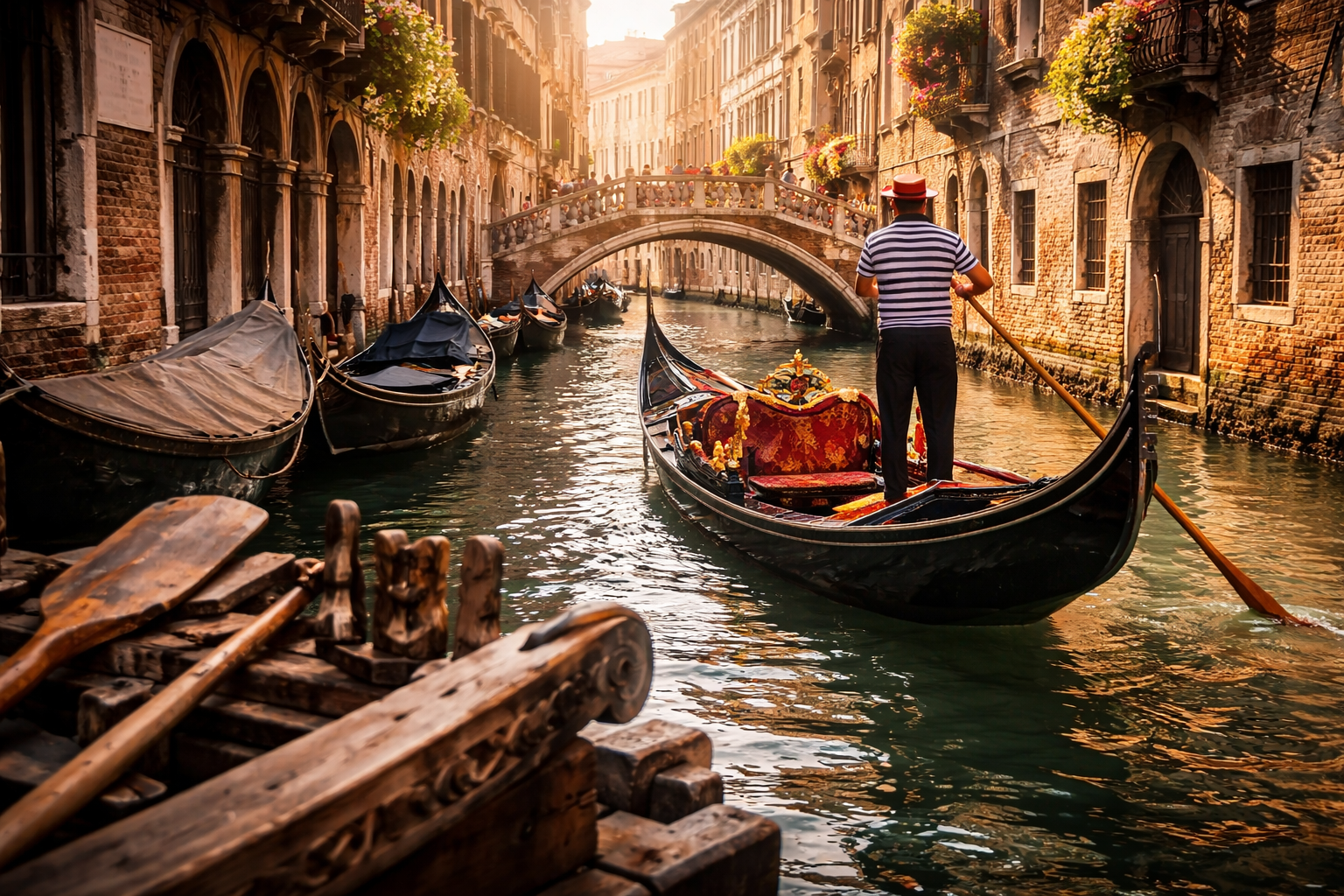
A Floating Symbol Beyond the Postcards
For most visitors, a gondola ride through Venice feels like a romantic ritual, a slow glide beneath bridges and past centuries-old palazzi. Yet behind this iconic experience lies a world far richer and more complex than the polished image seen in travel brochures. Gondolas are not merely tourist attractions; they are living artifacts of Venetian history, shaped by politics, craftsmanship, and social customs that span over a thousand years.
Long before Venice became a global destination, gondolas were the primary means of transportation in a city built on water. At their peak, tens of thousands of gondolas filled the canals, serving merchants, nobles, and everyday residents alike. Each journey carried not just passengers, but stories, secrets, and traditions that still echo across the lagoon today.
The Evolution of the Gondola
The gondola’s design did not emerge by chance. Its long, narrow shape was refined over centuries to navigate Venice’s tight canals and shifting tides. The distinctive asymmetry of the hull, often unnoticed by passengers, allows the boat to move straight despite being rowed with a single oar. This imbalance is a testament to Venetian ingenuity, blending function with elegance.
Historically, gondolas were far from uniform. They were painted in bright colors and adorned with lavish decorations that reflected the wealth and status of their owners. Over time, strict regulations standardized their appearance, leading to the iconic black gondola seen today. This uniformity was intended to curb excessive displays of luxury, reinforcing a sense of civic equality in a deeply stratified society.
Gondoliers: Guardians of a Hidden Craft
Behind every gondola is a gondolier, whose role extends far beyond steering a boat. Becoming a gondolier requires years of training, mastery of complex rowing techniques, and deep knowledge of Venice’s waterways. The profession is traditionally passed down through families, creating dynasties of gondoliers whose roots are intertwined with the city itself.
Gondoliers must memorize intricate canal networks, understand tidal patterns, and navigate crowded waterways with precision. Their striped shirts and straw hats may appear theatrical, but they symbolize a profession governed by strict rules, licenses, and cultural responsibility. Each gondolier is not only a boatman but also a storyteller, cultural ambassador, and silent witness to the city’s daily life.
The Cultural Role of Gondola Travel
Gondolas have long played a role in Venice’s social fabric. In past centuries, they were discreet spaces where political discussions, romantic encounters, and confidential negotiations took place. Curtains once shielded passengers from view, turning gondolas into private rooms afloat. These hidden interactions contributed to Venice’s reputation as a city of intrigue and subtle power dynamics.
Ceremonial gondola processions remain an important part of Venetian festivals today. Events such as historical regattas and religious celebrations showcase gondolas as symbols of continuity, linking modern Venice to its maritime past. Even in an era of motorboats and mass tourism, these rituals preserve a sense of identity rooted in tradition.
Secrets Beneath the Surface
What many travelers never realize is that gondola routes are carefully regulated. Certain canals are reserved for specific purposes, and gondoliers must adhere to unwritten rules of movement, communication, and etiquette. A subtle shout at a blind corner or a precise oar gesture carries meaning understood only by those fluent in the language of the canals.
There are also hidden workshops, known as squèri, where gondolas are still handcrafted using traditional methods. These workshops are tucked away from tourist routes, preserving skills that have changed little over centuries. Each gondola is built from multiple types of wood, selected for strength, flexibility, and balance, making every vessel a unique work of functional art.
Modern Challenges in a Timeless Setting
Today, gondolas exist at the intersection of heritage and modernity. Rising tourism, environmental concerns, and changing economic realities have transformed their role. While many rides cater to visitors, gondolas remain symbols of resistance against the complete mechanization of Venice’s waterways.
Preservation efforts focus on maintaining traditional craftsmanship while adapting to contemporary demands. Regulations limit the number of gondolas, protect training standards, and ensure that this centuries-old practice does not fade into mere performance.
More Than a Ride
A gondola journey is not just a scenic passage through Venice; it is an immersion into a layered history shaped by water, craftsmanship, and human connection. Each slow movement of the oar reflects generations of knowledge, each canal carries echoes of lives lived along its edges.
To truly experience Venice, one must look beyond the surface of the gondola ride and recognize it as a cultural ritual, a historical continuum, and a quiet testament to the city’s enduring relationship with water. In doing so, the gondola transforms from a simple boat into a gateway to the hidden soul of Venice.