
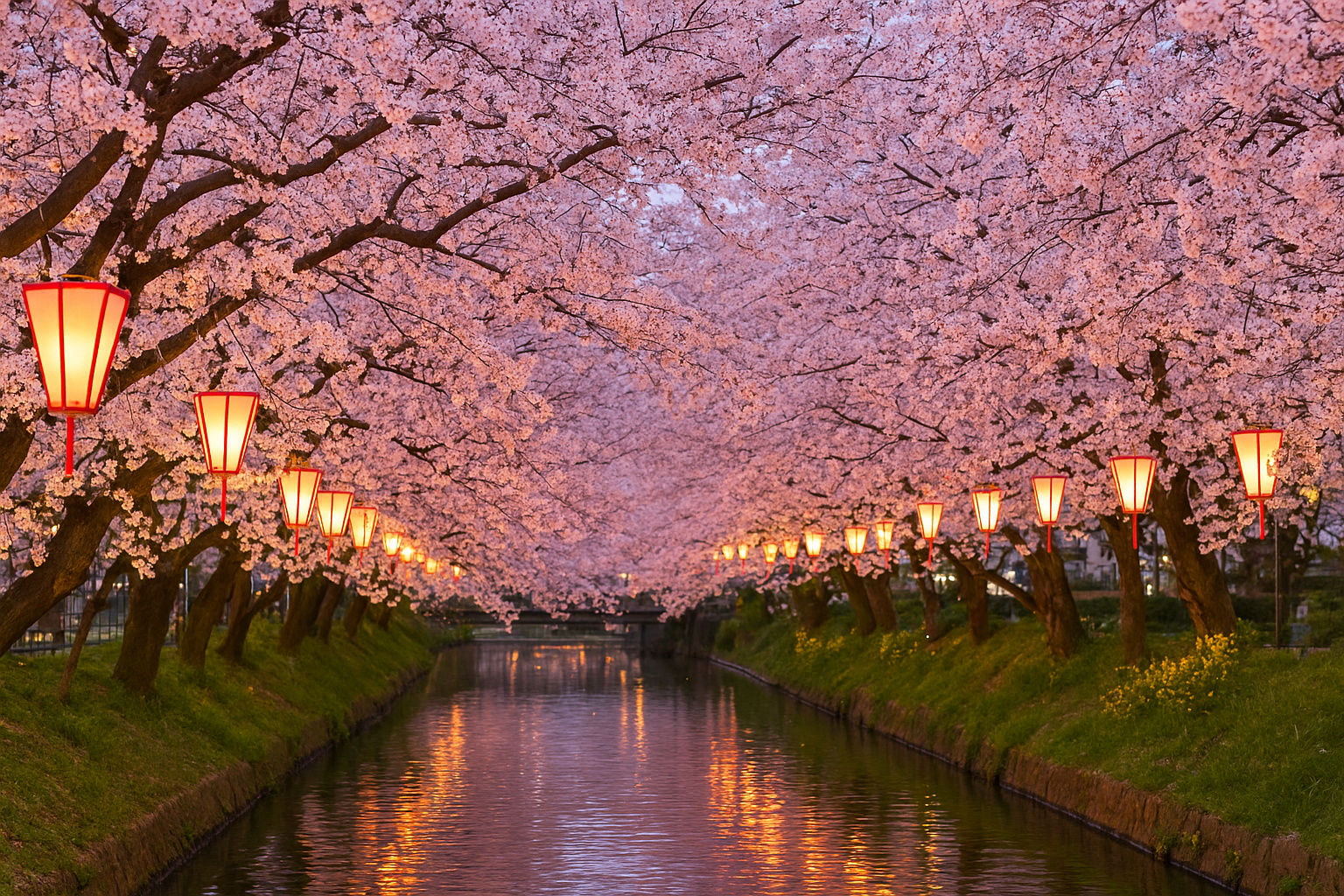
Blooming Lights: Experiencing Japan’s Cherry Blossom Festivals
Cherry blossoms, or sakura, are among the most iconic symbols of Japan, representing the fleeting beauty of life. Their short-lived bloom — lasting only a week or two — captures the Japanese philosophy of mono no aware, the awareness of impermanence. This cultural concept celebrates both the beauty and the transience of existence, reminding people to appreciate the present moment.
Sakura season is more than a natural spectacle — it’s a cultural event that unites communities, families, and travelers. Streets, parks, and riversides transform into pink and white dreamscapes, while celebrations of music, food, and art take place under the soft petals.
The Season of Blossoms
Cherry blossom season varies depending on geography. In southern Japan, such as Okinawa, sakura bloom as early as January, while in northern regions like Hokkaido, the blossoms may not appear until May. Tokyo and Kyoto typically experience peak bloom between late March and early April.
The Japanese Meteorological Agency tracks the “sakura front,” a blossom forecast broadcasted nationwide. Locals follow this eagerly, planning picnics and travels to coincide with full bloom — an event known as mankai.
Hanami: The Art of Flower Viewing
Hanami, literally “flower viewing,” is the cherished custom of gathering under blooming trees to appreciate their beauty. Families, friends, and colleagues spread out picnic blankets in parks, enjoying seasonal foods like sakura mochi (sweet rice cakes wrapped in cherry leaves) and bento boxes filled with colorful dishes.
In the evenings, the tradition of yozakura — night viewing — takes place. Lanterns illuminate the blossoms, creating a surreal atmosphere as petals glow against the dark sky. This serene beauty has inspired centuries of poetry, painting, and photography, as well as a quiet sense of reflection.
Iconic Cherry Blossom Destinations
Tokyo — Ueno Park and Chidorigafuchi
Ueno Park, with over a thousand cherry trees lining its central path, becomes a hub of activity during sakura season. Nearby, Chidorigafuchi offers a more tranquil experience — visitors can rent rowboats and glide through moats surrounded by pink petals gently falling into the water.
Kyoto — Maruyama Park and Philosopher’s Path
Kyoto, the cultural heart of Japan, offers an elegant sakura experience. Maruyama Park is famous for its grand shidare-zakura, or weeping cherry tree, which glows beautifully when lit at night. The Philosopher’s Path, a canal-side walkway lined with hundreds of cherry trees, provides a peaceful route for contemplative strolls during the bloom.
Hirosaki Castle — A Northern Gem
In Aomori Prefecture, Hirosaki Castle hosts one of Japan’s most celebrated cherry blossom festivals. The 17th-century castle stands amid 2,600 trees, their petals reflected in surrounding moats. When petals begin to fall, the water turns pink — a breathtaking sight often called “sakura snow.”
Mount Yoshino — The Mountain of Blossoms
Designated as a UNESCO World Heritage site, Mount Yoshino in Nara Prefecture boasts over 30,000 cherry trees. Blossoms appear in layers along the mountain slopes, creating a cascading pink sea that has been admired for over a thousand years.
Cultural Events and Traditions
Cherry blossom festivals go beyond flower viewing — they blend ancient rituals with modern festivities. Traditional tea ceremonies are held outdoors, blending the meditative calm of tea culture with the sensory joy of nature. Street stalls sell yakitori (grilled chicken), taiyaki (fish-shaped pastries filled with sweet bean paste), and sakura sake.
Music and dance performances, such as taiko drumming and kabuki theater, bring energy to the serene atmosphere. At night, hanami parties often include singing, laughter, and a celebratory spirit that bridges generations.
Beyond the Petals: A Deeper Connection
Sakura season is also a time of reflection for many Japanese people. It coincides with the start of the academic and fiscal year in April, symbolizing renewal and fresh beginnings. The falling petals serve as a metaphor for the transient nature of youth and the cycles of life.
For visitors, it’s a chance to witness how deeply nature intertwines with Japanese culture — not as a backdrop, but as a living, breathing participant in human experience.
How to Experience Sakura Responsibly
While the sight of blooming trees is enchanting, preserving them requires mindfulness. Visitors are encouraged not to break branches, step on roots, or leave litter behind. Reusable containers and cloth picnic mats are preferred over plastic ones. Quiet appreciation is also valued — after all, hanami is about connection, not consumption.
Conclusion: A Celebration of Ephemeral Beauty
To witness Japan’s cherry blossom season is to experience the essence of its culture — a harmony between nature, art, and emotion. Whether under the ancient trees of Kyoto, along Tokyo’s moats, or on the slopes of Mount Yoshino, the fleeting blossoms remind us to pause, breathe, and cherish the moment before it slips away.
Sakura season is not just about flowers — it’s about the poetry of impermanence, a living reminder that beauty, even when short-lived, leaves a lasting impression on the soul.