
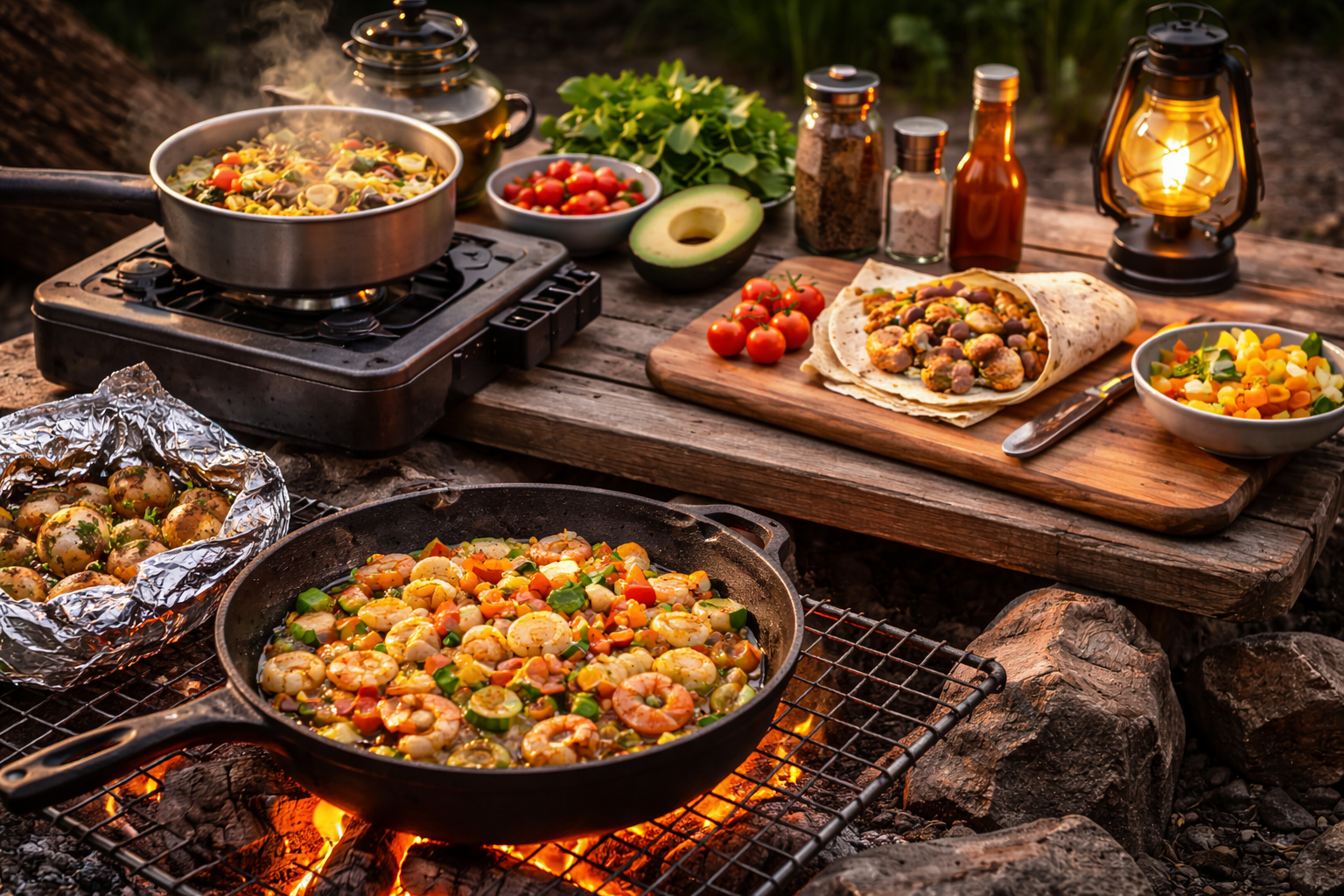
Campfire Gourmet Without the Fuss: Easy Camping Recipes That Taste Better Outdoors
Camping food has long suffered from an unfair reputation. For many people, it still means canned meals, instant noodles, or snacks eaten straight from the package. Yet cooking outdoors does not have to be complicated, heavy, or time-consuming to be satisfying. With a little planning and the right mindset, camping meals can be simple, nourishing, and surprisingly delicious, even when prepared on a small gas burner or an open fire with minimal equipment.
One of the biggest advantages of camping cooking is that it naturally encourages simplicity. When you are away from a full kitchen, you begin to appreciate recipes that rely on a few versatile ingredients rather than long preparation times. Fresh vegetables that keep well, grains that cook quickly, and proteins that require minimal handling become the foundation of stress-free outdoor meals. Instead of replicating complex home dishes, camping cuisine works best when it embraces adaptability and ease.
Heat control is often the main concern for campers. Gas burners provide steady, predictable heat, making them ideal for quick sautés, boiling water, or one-pan meals. Campfires, while more atmospheric, require patience and awareness, but they also add depth of flavor that no stove can replicate. Learning to cook with indirect heat, placing pans slightly off-center from the flame or using embers instead of direct fire, allows food to cook evenly without burning.
Breakfast is often the easiest meal to simplify. Warm grains such as oats or couscous can be prepared with just hot water, dried fruits, nuts, or honey. Eggs are another camping favorite, as they cook quickly and pair well with vegetables or flatbreads. Preparing chopped vegetables at home and storing them in reusable containers saves time and reduces cleanup at the campsite. Morning meals that require only one pan or pot set a relaxed tone for the day ahead.
Lunch during camping trips is typically best kept light and flexible. Wraps, flatbreads, or tortillas work exceptionally well because they are compact, durable, and adaptable. They can be filled with grilled vegetables, canned beans, cheese, or pre-cooked grains warmed briefly over a burner. Meals like these require minimal cooking and allow campers to eat when it fits their schedule rather than stopping for long preparation.
Dinner is where camping food truly shines. One-pot meals are ideal, combining grains, vegetables, and protein into a single dish that simmers gently while everyone relaxes nearby. Rice, lentils, or quick-cooking pasta can be paired with dried spices and simple sauces prepared in advance. Foil-packet cooking is another effective method, especially over a fire. Ingredients wrapped tightly in foil cook in their own steam, preserving moisture and flavor while eliminating the need for extra cookware.
Flavor plays a crucial role when cooking outdoors. Because camping meals are often simple, seasoning becomes even more important. Small containers of spices, oil, and sauces make a significant difference without adding weight. Garlic powder, smoked paprika, dried herbs, or soy-based sauces can transform basic ingredients into satisfying meals. Preparing spice blends at home reduces the number of containers needed while ensuring variety.
Food safety and storage are also key considerations. Choosing ingredients that tolerate temperature changes helps reduce stress. Hard vegetables, cured meats, dried foods, and shelf-stable items are well suited for camping environments. Reusable containers and insulated bags keep food fresh while minimizing waste. This approach not only makes cooking easier but also aligns with more sustainable camping practices.
The emotional aspect of camping food should not be underestimated. Cooking together outdoors slows the pace of the day and encourages connection. Meals become shared experiences rather than tasks to complete quickly. The smell of food carried by cool air, the sound of a fire, and the absence of screens all contribute to a deeper sense of satisfaction that goes beyond the meal itself.
Camping recipes do not need to impress through complexity. Their strength lies in adaptability, ease, and comfort. When meals are designed around minimal equipment and simple techniques, cooking becomes a natural part of the adventure rather than a burden. With thoughtful ingredient choices and a willingness to embrace simplicity, camping food can be both effortless and memorable, proving that great meals do not require a full kitchen—only good ingredients and an open flame.