
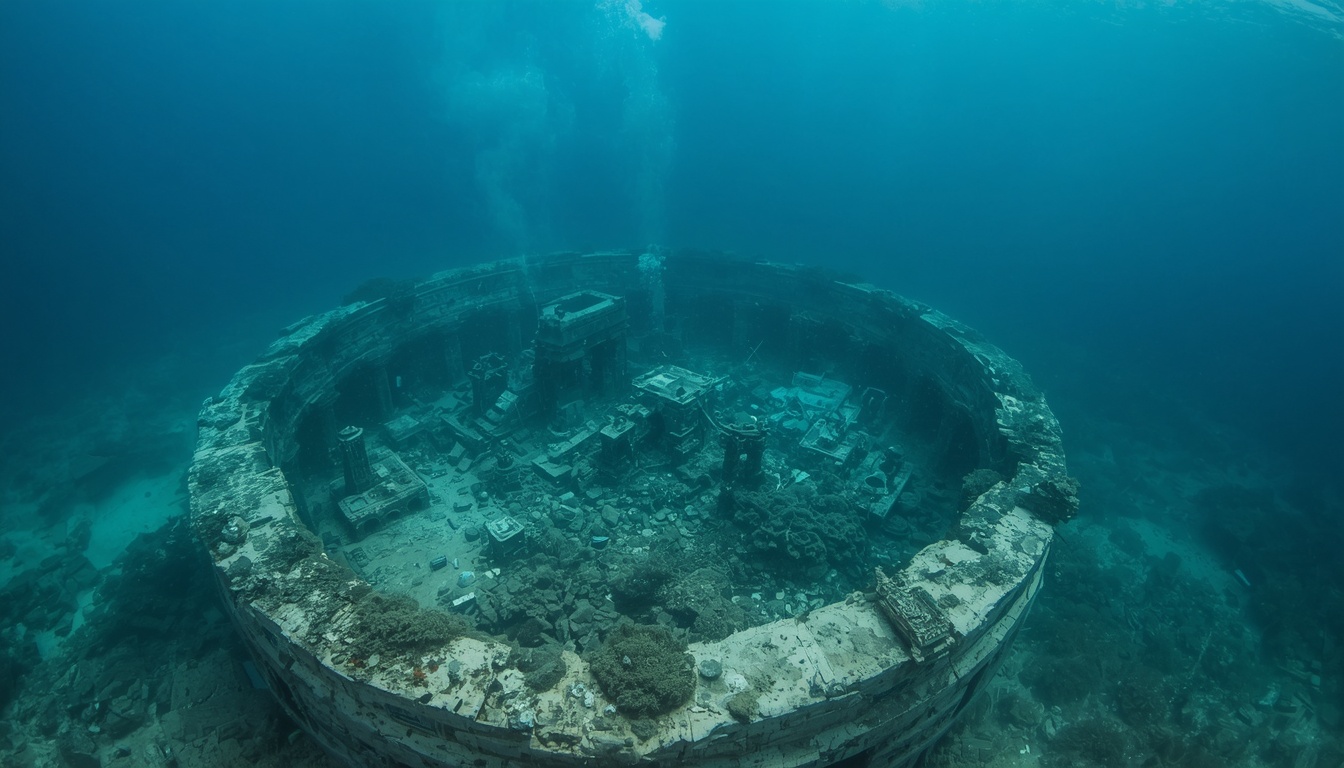
Sunken Cities: Exploring the Underwater World of Lost Civilizations and the Future of Submerged Tourism
Beneath the surface of oceans, seas, lakes, and reservoirs lies a hidden world that few people ever have the opportunity to see. Ancient ports, forgotten settlements, sacred temples, roads, aqueducts, and entire cities rest underwater, preserved by time and protected by the depths. These submerged sites offer a unique glimpse into human history, revealing stories of natural disasters, changing coastlines, rising sea levels, earthquakes, and the evolution of civilizations.
For decades, underwater archaeology was primarily the domain of researchers and specialized divers. Today, however, growing interest in cultural heritage and adventure travel has transformed many submerged historical sites into fascinating destinations for underwater tourism. From ancient Mediterranean ports to flooded villages hidden beneath modern reservoirs, travelers are increasingly drawn to the mysteries of the sunken world.
As technology advances and preservation efforts expand, underwater heritage sites may become some of the most remarkable cultural attractions of the future, combining history, science, conservation, and tourism in entirely new ways.
How Cities End Up Underwater
The idea of a city disappearing beneath the water may sound like fiction, but history contains numerous examples of communities that were gradually or suddenly submerged.
Some settlements were lost due to natural events. Earthquakes, tsunamis, coastal erosion, volcanic activity, and shifting tectonic plates have altered shorelines throughout history. Ports that once stood above sea level may now rest several meters underwater.
Other locations were intentionally flooded. During the twentieth century, the construction of dams and reservoirs submerged numerous villages, towns, roads, churches, and agricultural regions. In many cases, residents relocated while their former communities remained preserved beneath newly created lakes.
Climate fluctuations and changing sea levels have also played a role. Archaeologists continue to discover evidence of prehistoric settlements that were inhabited thousands of years ago before rising waters transformed landscapes and coastlines.
Each submerged site represents a unique chapter in the relationship between humanity and the environment.
Underwater Archaeology and UNESCO Heritage
The growing importance of underwater cultural heritage has led to international efforts aimed at protecting submerged historical sites.
UNESCO has played a significant role in promoting the preservation of underwater cultural resources. Through international cooperation, researchers work to document, study, and protect archaeological remains from looting, environmental damage, and uncontrolled tourism.
Underwater heritage includes far more than shipwrecks. Ancient harbors, religious structures, roads, aqueduct systems, defensive walls, and residential districts all contribute valuable information about past civilizations.
These sites provide insight into trade networks, engineering achievements, urban planning, religious practices, and daily life in societies that existed centuries or even millennia ago. Unlike many land-based archaeological locations, underwater environments sometimes preserve materials exceptionally well due to reduced oxygen exposure and limited human interference.
As interest in submerged heritage grows, UNESCO and partner organizations continue developing strategies to balance public access with long-term conservation.
The Fascination of Ancient Aqueducts and Submerged Infrastructure
Among the most intriguing discoveries beneath the water are remnants of ancient infrastructure.
Aqueducts, roads, bridges, and harbor facilities demonstrate the remarkable engineering capabilities of historical civilizations. Even after centuries underwater, many structures remain recognizable.
Roman engineering provides some of the most impressive examples. Divers exploring submerged coastal regions have discovered sections of ancient ports, breakwaters, and water management systems that reveal sophisticated construction techniques.
These structures offer more than visual appeal. They help historians understand how ancient communities obtained water, managed transportation, facilitated trade, and adapted to environmental challenges.
For visitors, swimming above an ancient road or observing the remains of a submerged aqueduct creates a powerful connection to the past that differs significantly from traditional museum experiences.
Famous Sunken Cities Around the World
Several submerged cities have captured global attention due to their historical significance and remarkable preservation.
Off the coast of Egypt, the ancient city of Thonis-Heracleion remained hidden beneath the Mediterranean Sea for centuries before being rediscovered by underwater archaeologists. Once an important trading hub, the city contains temples, statues, and harbor structures that offer extraordinary insights into ancient Egyptian society.
Near the coast of India, archaeological investigations have explored submerged structures that some researchers associate with ancient settlements described in historical and mythological traditions.
In the Mediterranean region, numerous Greek and Roman sites now lie underwater due to geological changes and shifting coastlines. These locations attract both researchers and experienced divers interested in exploring submerged history.
Meanwhile, artificial lakes around the world conceal flooded villages where church towers, stone streets, and abandoned buildings occasionally become visible when water levels drop.
Each site tells a unique story of environmental transformation and human adaptation.
The Rise of Underwater Tourism
As recreational diving becomes more accessible, underwater cultural tourism has expanded significantly.
Many travelers seek experiences that combine adventure with historical exploration. Swimming through the remains of an ancient settlement or observing archaeological structures beneath clear water provides a sense of discovery that few other travel experiences can match.
Specialized diving tours now operate at numerous underwater heritage locations. These excursions often include educational components that explain the history, archaeology, and conservation efforts associated with each site.
For non-divers, technological innovation is creating new opportunities. Glass-bottom boats, underwater observation platforms, remotely operated cameras, and virtual reality experiences allow broader audiences to engage with submerged heritage without entering the water.
These developments are making underwater history more accessible while reducing pressure on fragile archaeological sites.
Underwater Museums: A New Vision for Cultural Preservation
One of the most exciting developments in recent years has been the emergence of underwater museums.
Unlike traditional museums, underwater museums allow visitors to experience cultural artifacts within aquatic environments. Some museums feature submerged sculptures designed specifically for divers, while others incorporate archaeological remains into carefully managed tourism experiences.
These projects often serve multiple purposes. In addition to promoting cultural education, underwater museums can support marine conservation by creating artificial reefs that provide habitat for aquatic life.
The combination of art, history, ecology, and tourism offers a unique model for sustainable visitor engagement. As technology improves, underwater museums may become increasingly sophisticated, integrating augmented reality, digital interpretation systems, and advanced conservation techniques.
Such innovations could transform how people interact with cultural heritage in the future.
Conservation Challenges
Despite their appeal, submerged heritage sites face numerous threats.
Natural processes such as corrosion, biological growth, sediment movement, and climate-related changes can damage archaeological remains. Human activities also present risks, including unauthorized artifact removal, irresponsible tourism, pollution, and coastal development.
Balancing access with preservation remains a significant challenge. While tourism generates awareness and funding, excessive visitation can place fragile sites at risk.
Conservation specialists increasingly rely on advanced mapping technologies, underwater robotics, photogrammetry, and digital documentation to monitor conditions and guide preservation efforts.
Protecting these sites requires international cooperation, scientific expertise, and public education.
The Future of Exploring the Underwater Past
Technological advances are rapidly expanding humanity’s ability to explore submerged landscapes.
High-resolution sonar systems, autonomous underwater vehicles, artificial intelligence, and three-dimensional mapping techniques are helping researchers discover and document previously unknown sites. Many experts believe that thousands of significant underwater archaeological locations remain undiscovered.
Virtual reality and digital reconstruction may soon allow people to experience ancient underwater cities as they once appeared above the surface. Visitors could potentially explore detailed recreations of lost civilizations while learning about the historical events that led to their submersion.
These innovations have the potential to revolutionize both tourism and archaeological research.
Conclusion
The world’s submerged cities represent one of the most fascinating intersections of history, archaeology, technology, and travel. Hidden beneath oceans, lakes, and reservoirs, these forgotten places preserve stories of human achievement, environmental change, and cultural evolution.
From ancient ports and Roman aqueducts to underwater museums and UNESCO-supported conservation projects, submerged heritage offers extraordinary opportunities for discovery. As underwater tourism continues to grow and new technologies reveal previously inaccessible sites, interest in the hidden world beneath the water is likely to increase.
For travelers, divers, historians, and curious explorers alike, the appeal of sunken cities lies not only in their mystery but also in their ability to connect us with civilizations that once flourished where waves now roll overhead. These underwater landscapes remind us that history is not confined to the land we walk on—it also exists in the silent depths below, waiting to be explored.